Parents want to do everything possible to protect their children’s health, and that includes maintaining healthy teeth from an early age. While daily brushing, flossing, and regular dental visits play a major role in preventing cavities, children remain especially vulnerable to tooth decay. Their developing brushing habits, frequent snacking, and love for sugary foods make it easier for bacteria to thrive, particularly in the deep grooves of the back teeth.
One preventive treatment that has gained widespread recognition for reducing the risk of cavities is dental sealants. These thin protective coatings are applied to the chewing surfaces of molars, creating a barrier that helps keep food particles and bacteria from settling into areas that are difficult to clean. Although the procedure is quick and painless, many parents still wonder whether dental sealants are truly worth the investment.
The answer depends on understanding how sealants work, who benefits from them, and how they contribute to long-term oral health. If you’re exploring Pediatric dentistry in Phillipsburg, learning about dental sealants can help you make an informed decision about protecting your child’s smile.
What Are Dental Sealants?
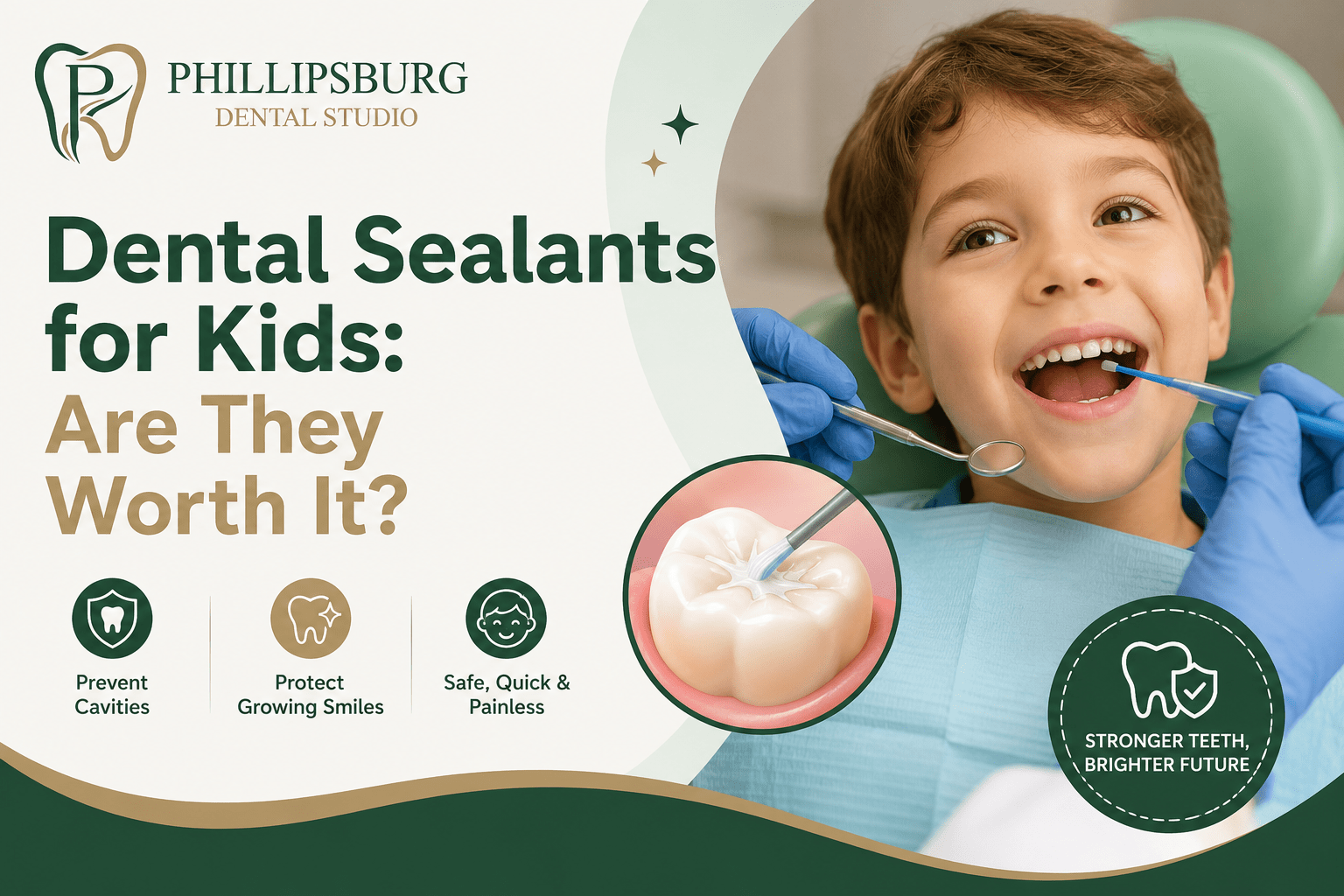
Dental sealants are thin, protective coatings made from a durable resin material. They are carefully painted onto the chewing surfaces of permanent molars and premolars, where deep pits and grooves naturally collect food particles and bacteria.
Unlike fluoride treatments, which strengthen tooth enamel, sealants act as a physical shield. Once bonded to the tooth, they create a smooth surface that prevents plaque and food debris from becoming trapped in tiny crevices that toothbrush bristles often cannot reach.
Because the application process is completely non-invasive, children typically feel little to no discomfort during the procedure. No drilling, injections, or removal of tooth structure is required.
Why Are Children’s Molars More Prone to Cavities?
The back teeth play an important role in chewing food, but they also have a complex surface with narrow grooves and depressions. Even children who brush regularly may struggle to clean these areas effectively.
Several factors increase the likelihood of cavities developing in molars:
- Deep grooves that easily trap food.
- Developing brushing and flossing skills.
- Frequent snacking throughout the day.
- Sugary drinks and sticky foods.
- Naturally higher cavity risk during childhood.
Since molars erupt around ages six and twelve, protecting them early can significantly reduce the chances of decay during the years when children are most susceptible.
How Do Dental Sealants Work?
Dental sealants create a protective barrier over the vulnerable chewing surfaces of teeth. Once applied, they block bacteria, plaque, and food particles from entering the deep grooves where cavities often begin.
The process starts with thoroughly cleaning the tooth. After the surface is prepared, a special conditioning solution helps the sealant bond securely to the enamel. The liquid sealant is then painted onto the tooth and hardened using a curing light.
Within minutes, the sealant becomes a durable protective coating that can withstand normal chewing while helping reduce the risk of decay.
Benefits of Dental Sealants for Kids
Dental sealants offer far more than simple cavity prevention. They contribute to healthier smiles while reducing the need for future dental treatments.
1. Excellent Cavity Protection
One of the greatest advantages of sealants is their ability to prevent cavities before they begin. Since most childhood cavities develop on the chewing surfaces of molars, covering these areas provides an additional layer of defense beyond brushing and flossing.
Research has consistently shown that children with dental sealants experience significantly fewer cavities in their permanent molars compared to children without sealants.
2. Quick and Comfortable Procedure
Children often become anxious when they hear the word “dental treatment.” Fortunately, sealant placement is one of the simplest procedures performed in a dental office.
There are:
- No injections.
- No drilling.
- No discomfort.
- No recovery period.
Most appointments are completed within a short visit, allowing children to return to school or normal activities immediately afterward.
3. Cost-Effective Preventive Care
Treating cavities often involves fillings, crowns, or more extensive procedures if decay progresses. Preventing these problems with sealants is generally far more affordable than repairing damaged teeth later.
Many parents view sealants as a smart long-term investment because they reduce the likelihood of costly restorative treatments during childhood.
4. Long-Lasting Protection
Dental sealants are designed to remain in place for several years. During routine dental examinations, your dentist checks the condition of each sealant and can easily repair or replace any areas showing signs of wear.
With proper care, sealants continue protecting teeth throughout the years when children face the highest cavity risk.
5. Supports Better Oral Health Habits
Sealants are not a substitute for brushing or flossing, but they complement a child’s daily oral hygiene routine.
Because smooth sealed surfaces are easier to clean than deep grooves, children often find brushing more effective, encouraging healthy habits that continue into adulthood.
At What Age Should Children Get Dental Sealants?
The ideal timing depends on when permanent molars erupt.
Most children receive their first set of permanent molars around six years of age. These teeth are often referred to as the “six-year molars.” A second set typically appears around age twelve.
Applying sealants soon after these teeth erupt protects before cavities have an opportunity to develop.
However, some younger children with unusually deep grooves or higher cavity risk may also benefit from sealants on certain baby teeth if recommended by their dentist.
Who is a Good Candidate for Dental Sealants?
Although many children benefit from sealants, they are especially recommended for those who have an increased risk of developing cavities.
Your child may be an excellent candidate if they:
- Have newly erupted permanent molars.
- Have deep pits and grooves in their teeth.
- Frequently consume sugary snacks or beverages.
- Have experienced cavities in the past.
- Find brushing difficult or inconsistent.
- Wear orthodontic appliances that make cleaning more challenging.
During routine examinations, a Pediatric dentist in Phillipsburg, NJ can determine whether sealants are appropriate based on your child’s oral health and cavity risk.
Are Dental Sealants Safe?
Parents naturally want reassurance that any preventive treatment is safe for their children.
Dental sealants have been used successfully for decades and are supported by major dental organizations because of their proven safety and effectiveness.
The materials used for sealants undergo extensive testing before being approved for clinical use. When properly applied by trained dental professionals, sealants provide reliable protection without affecting normal tooth development or function.
For families visiting a trusted Dental clinic in Phillipsburg, sealants remain one of the safest and most effective preventive services available for children.
Can Children Still Get Cavities with Sealants?
Although sealants significantly reduce the risk of decay, they do not make teeth completely cavity-proof.
Children must still:
- Brush twice daily.
- Floss every day.
- Limit sugary snacks.
- Drink plenty of water.
- Visit the dentist regularly.
Sealants work best as one part of a complete preventive dental care routine rather than as a replacement for good oral hygiene.
Why Preventive Dentistry Matters
Preventing dental problems is always preferable to treating them after they occur. Children who avoid cavities often experience less discomfort, fewer dental procedures, and greater confidence during future dental visits.
Routine checkups allow dentists to monitor oral development, identify concerns early, and provide preventive treatments that support healthy smiles throughout childhood.
In addition to preventive care, dental practices also educate parents and children about proper brushing techniques, healthy eating habits, and the importance of regular professional cleanings.
How Long Do Dental Sealants Last?
One of the most common questions parents ask is how long dental sealants continue protecting their child’s teeth. While every child is different, sealants typically last several years before they need to be repaired or replaced. Their lifespan depends on factors such as chewing habits, oral hygiene, and regular dental care.
During routine dental checkups, your dentist will examine each sealed tooth to ensure the protective coating remains intact. If a sealant becomes chipped or begins to wear away, it can usually be repaired quickly without discomfort. This simple maintenance helps preserve the tooth’s protection during the years when children are most vulnerable to cavities.
Although sealants are durable, they are not permanent. Regular dental visits ensure they continue providing the level of protection your child needs as they grow.
Dental Sealants vs. Fluoride: Do Children Need Both?
Parents sometimes wonder whether dental sealants replace fluoride treatments. The answer is no. These two preventive treatments work in different ways and are often most effective when used together.
Fluoride strengthens tooth enamel, making it more resistant to acid attacks from plaque and bacteria. It protects the entire tooth surface and can even help reverse very early stages of tooth decay.
Dental sealants, on the other hand, act as a protective shield over the deep grooves of molars where toothbrush bristles cannot always reach. They physically block food particles and bacteria from settling into these hard-to-clean areas.
When combined with good oral hygiene, healthy eating habits, and regular dental examinations, fluoride and sealants provide comprehensive protection against cavities.
Common Myths About Dental Sealants
Despite being used successfully for decades, several misconceptions still cause parents to hesitate before choosing sealants for their children.
Myth 1: Sealants Are Only Necessary for Children With Cavities
Many people believe sealants should only be applied after cavities appear. In reality, sealants are designed to prevent cavities before they develop. Applying them soon after permanent molars erupt offers the greatest benefit.
Myth 2: Sealants Replace Brushing and Flossing
Sealants provide extra protection, but they cannot replace daily oral hygiene. Children still need to brush twice a day, floss daily, and visit the dentist regularly to maintain healthy teeth and gums.
Myth 3: The Procedure Is Painful
Dental sealant application is completely non-invasive. Since there is no drilling, injections, or removal of tooth structure, most children remain comfortable throughout the entire appointment.
Myth 4: Sealants Are Only for Young Children
Although sealants are commonly recommended for children, teenagers and even adults with deep grooves and a higher risk of cavities may also benefit from this preventive treatment.
When a Dental Emergency Happens
Even with excellent preventive care, accidents can still happen. Children are naturally active, and sports injuries, playground falls, or unexpected tooth pain sometimes require immediate attention.
Situations such as severe toothaches, knocked-out permanent teeth, broken teeth, dental abscesses, or injuries involving significant bleeding should never be ignored. Seeking prompt treatment helps relieve discomfort while improving the chances of saving damaged teeth.
If your child experiences a dental emergency, receiving care from a provider experienced in Phillipsburg emergency dentistry can make a significant difference in protecting their oral health.
Parents living near neighboring communities may also require urgent treatment outside their immediate area. Services offering Emergency dentistry Easton PA can provide timely care when unexpected dental problems occur.
For families searching for an Emergency dentist in Phillipsburg, NJ, it is helpful to know where to seek immediate treatment before an emergency arises. Being prepared allows you to respond quickly if your child experiences sudden pain or dental trauma.
Conclusion
Dental sealants are one of the most effective preventive treatments available for protecting children’s teeth from cavities. By covering the deep grooves of permanent molars, they create a durable barrier that helps keep bacteria and food particles from causing decay. The procedure is quick, painless, and provides years of protection with minimal maintenance.
Although sealants do not replace brushing, flossing, fluoride treatments, or routine dental visits, they serve as an important part of a comprehensive preventive care plan. When applied at the right time and monitored during regular checkups, they can reduce the need for future restorative treatment and help children maintain healthier smiles as they grow.
Contact us today to schedule your child’s dental appointment and take the next step toward a lifetime of healthy, confident smiles.