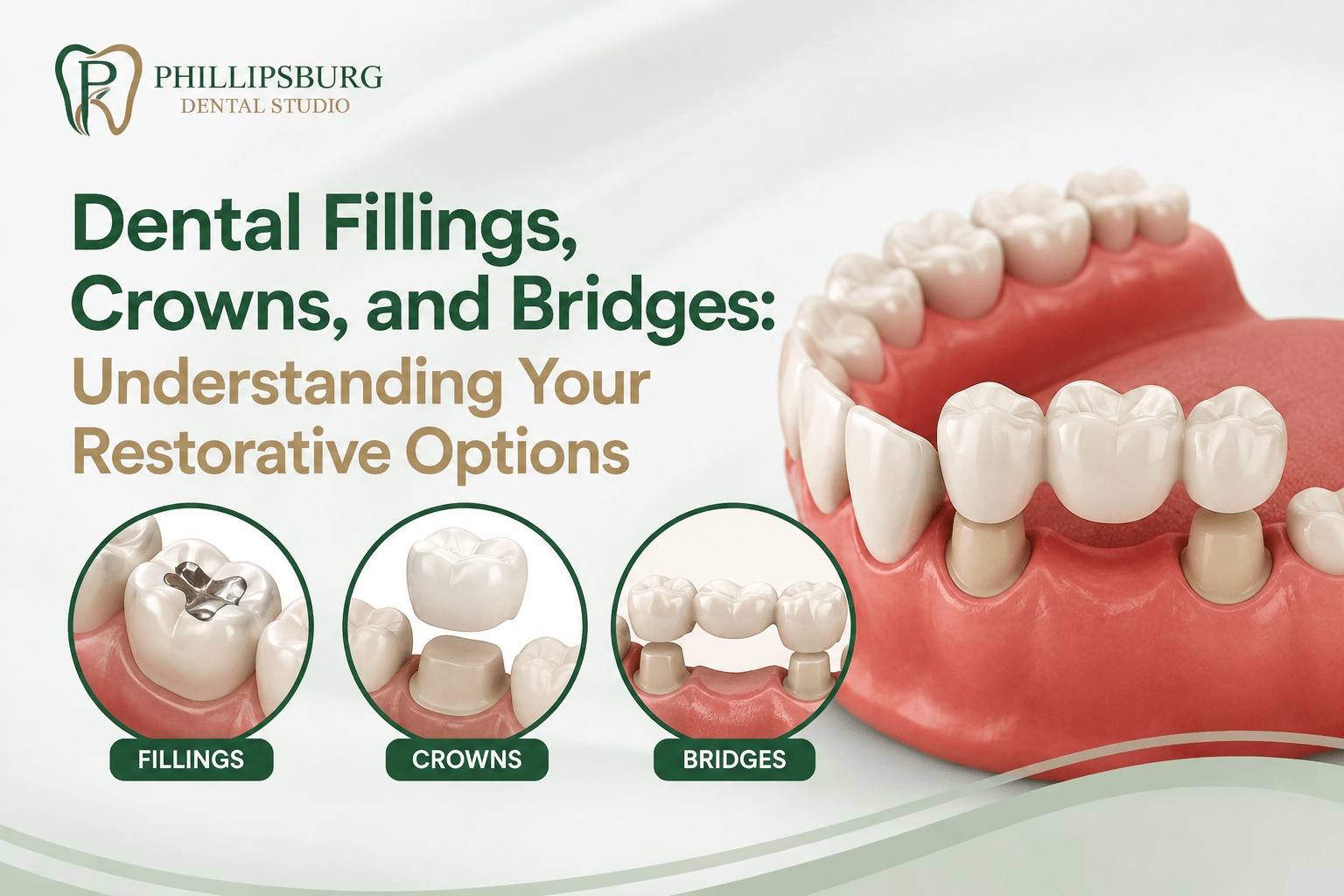
Choosing the right restorative treatment can help protect damaged teeth, restore comfortable chewing, and support long-term oral health. At Phillipsburg Dental Studio, we provide personalized restorative dental care based on the condition of each tooth, the surrounding oral structures, and each patient’s individual needs.
When a tooth has decay, a crack, significant wear, or has been lost entirely, different treatments may be appropriate. Dental fillings, dental crowns, and dental bridges are among the most common restorative options, but they serve different purposes. Understanding how each treatment works can make it easier to have an informed conversation with our dental team.
What is Restorative Dentistry?
Restorative dentistry focuses on repairing or replacing teeth that have been damaged, weakened, decayed, or lost, helping patients regain healthy function while protecting their remaining natural teeth for the future.
Restorative dentistry encompasses treatments designed to restore tooth structure, improve chewing ability, protect vulnerable teeth, and maintain a healthy and functional bite. Depending on the situation, restorative dental treatment may involve a relatively simple filling or a more extensive restoration such as a crown or bridge.
Our approach to restorative dental care in Phillipsburg, NJ begins with evaluating the tooth and surrounding tissues rather than automatically recommending a particular procedure. The extent of damage, remaining healthy tooth structure, location of the tooth, bite forces, and overall oral health can all influence the appropriate treatment.
Restorative care is also different from treatments performed primarily for cosmetic purposes. For example, cosmetic teeth whitening is generally intended to lighten tooth color and improve the appearance of the smile, while restorative treatment addresses structural or functional problems.
Dental Fillings: A Simple Solution for Cavities
Dental fillings are commonly used when decay or relatively minor damage has affected a tooth, but enough healthy structure remains to restore it without requiring a larger restoration.
When Do You Need a Dental Filling?
A filling may be recommended when a cavity has created a small or moderate area of tooth damage. Dental decay develops when acids produced by bacteria gradually weaken tooth enamel and underlying tooth structure.
If decay is identified early, removing the damaged portion and filling the resulting space can help stop the progression of the cavity while preserving as much healthy natural tooth structure as possible.
Fillings may also be considered for certain forms of minor tooth damage, depending on the location and condition of the tooth. During an examination, we assess the extent of the affected area before determining whether a filling is appropriate.
What Happens During a Dental Filling?
A dental filling generally begins with an examination of the affected tooth. If necessary, local anesthesia is used to keep the procedure comfortable.
We then remove the decayed or compromised tooth structure and carefully clean the area. The tooth is prepared to receive the filling material, which is placed and shaped to restore the missing structure.
After the filling has been completed, we check the bite and make any necessary adjustments. A properly shaped restoration should allow the patient to chew comfortably while maintaining the natural function of the tooth.
Benefits of Dental Fillings
Dental fillings can offer several important advantages:
- Preservation of natural tooth structure
- Restoration of normal chewing function
- Protection against continued progression of decay
- A relatively conservative approach for appropriate cavities
- Repair of damaged areas without requiring a full-coverage restoration
The sooner a cavity is evaluated, the more opportunity there may be to address it before more extensive tooth damage develops.
Dental Crown Treatment: Protecting a Damaged Tooth
A dental crown is a custom restoration designed to cover and protect a weakened or substantially damaged tooth. Rather than simply filling a localized area, a crown surrounds the remaining tooth structure to provide additional protection and restore its shape and function.
A tooth crown may be recommended for several reasons, including:
- Large cavities
- Cracked or weakened teeth
- Extensive tooth wear
- Teeth that have undergone root canal treatment
- Teeth with substantial structural loss
- Certain situations involving support for other dental restorations
A crown may be especially useful when a tooth has lost enough structure that a conventional filling would not provide adequate protection.
What is Involved in Dental Crown Treatment?
Crown treatment begins with a comprehensive examination. We evaluate the tooth, surrounding tissues, bite, and overall condition to determine whether a crown is suitable.
The tooth is then carefully prepared so the restoration can fit properly. Depending on the treatment process and technology used, digital impressions or traditional impressions may be taken to create an accurate representation of the prepared tooth.
When necessary, a temporary crown may be placed while the permanent restoration is being fabricated. Once the permanent crown is ready, we evaluate its fit, appearance, contacts, and bite before securing it in place.
Choosing an experienced crown dentist in Phillipsburg, NJ can be important because proper planning and fitting contribute to the comfort, function, and durability of a restoration.
Patients searching for a dental crown Easton PA or dental crowns near me Phillipsburg can benefit from a professional evaluation rather than choosing a restoration based solely on symptoms or appearance.
How to Choose a Crown Dentist
When considering crown treatment, look for a dental practice that provides:
- Comprehensive examinations
- Experience with restorative procedures
- High-quality restorative materials
- Personalized treatment planning
- Careful attention to bite and tooth function
- Ongoing dental maintenance and follow-up
At Phillipsburg Dental Studio, we consider the condition of the tooth and the patient’s broader oral health when developing a restorative treatment plan.
Dental Bridge Treatment: Replacing Missing Teeth
A dental bridge is a fixed restoration used to replace certain missing teeth. It typically uses supporting teeth or other appropriate structures to hold an artificial tooth or teeth in the space created by tooth loss.
Replacing a missing tooth is not only about appearance. Gaps can affect chewing and may contribute to changes in tooth positioning. Depending on the location and circumstances, replacing missing teeth can help restore function and support a more balanced bite.
What is Dental Bridge Treatment?
Dental bridge treatment begins with an evaluation of the missing tooth or teeth and the surrounding oral structures. We assess the supporting teeth to determine whether they are suitable for the planned restoration.
When appropriate, supporting teeth may be prepared to accommodate the bridge. Impressions or digital scans are then used to create a restoration that fits the patient’s mouth.
Once the bridge is completed, we check its fit, bite, appearance, and function before placing it. Follow-up care and regular dental examinations remain important for maintaining both the bridge and the surrounding teeth.
Patients considering dental bridge treatment can discuss their options with our dental team to determine whether a bridge is appropriate for their particular situation.
A dental bridge in Easton, PA may provide a fixed option for replacing certain missing teeth. Patients searching for a bridge dentist in Phillipsburg, NJ should receive a complete evaluation before treatment is recommended.
Benefits of Dental Bridges
Dental bridges may provide several benefits when appropriately selected:
- Restore chewing function
- Fill a visible space created by tooth loss
- Support normal tooth alignment
- Help restore aspects of speech affected by certain missing teeth
- Provide a fixed replacement option for appropriate cases
- Improve the overall appearance of the smile
The suitability of a bridge depends on factors such as the number and location of missing teeth and the condition of the supporting structures.
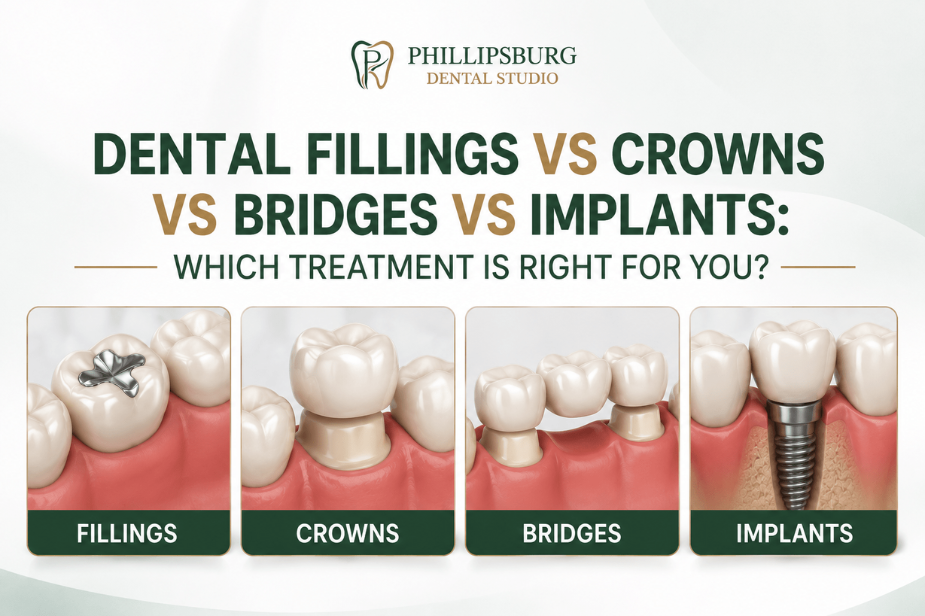
Dental Fillings vs. Crowns vs. Bridges
Each restorative treatment addresses a different type of dental problem. The following comparison provides a simple overview:
|
Treatment |
Typically Used For |
Main Purpose |
| Dental Filling | Small to moderate cavities | Repair damaged tooth structure |
| Dental Crown | Severely damaged or weakened teeth | Protect and restore a tooth |
| Dental Bridge | One or more missing teeth | Replace missing teeth |
There is no single restoration that is best for every patient. A filling may be appropriate for a relatively small cavity, while a crown may provide greater protection when substantial tooth structure has been lost. A bridge, meanwhile, is designed to address tooth loss rather than simply repair an existing natural tooth.
How Does a Dentist Decide Which Restorative Treatment You Need?
Selecting restorative treatment requires an individualized assessment because the same symptom can occur with very different levels of tooth damage, decay, or structural weakness.
We consider factors such as:
- Extent of tooth damage
- Amount of healthy tooth structure remaining
- Presence and depth of decay
- Location of the affected tooth
- Bite and chewing forces
- Condition of surrounding teeth
- Overall oral health
- Existing restorations
- Patient goals and preferences
For example, a tooth with a small cavity may require only a filling, while a heavily weakened tooth may need the additional protection provided by a crown.
A dentist in Phillipsburg, NJ can evaluate these factors and explain the available options. As a family dentist, we also recognize that restorative needs can vary significantly between patients and across different stages of life.
Restorative Dental Care at Phillipsburg Dental Studio
At Phillipsburg Dental Studio, we focus on personalized restorative dental care designed around each patient’s individual oral health needs.
A thorough examination allows us to identify existing problems, assess the condition of natural teeth, and develop a treatment plan that addresses both immediate concerns and long-term dental health.
For patients searching for a dental clinic in Phillipsburg, having evaluation, treatment planning, and ongoing dental care available through one practice can make restorative treatment more convenient.
Our approach emphasizes appropriate diagnosis, careful treatment planning, comfortable care, and restoration of natural tooth function whenever possible. Patients looking for a dental office near Easton can also consider Phillipsburg Dental Studio when exploring restorative dental options.
How to Care for Dental Fillings, Crowns, and Bridges
Good daily oral hygiene plays an important role in protecting restorative work and the natural teeth around it. Although fillings, crowns, and bridges are designed for everyday function, they still require consistent care.
We recommend:
- Brushing twice daily with fluoride toothpaste.
- Cleaning between teeth every day with floss or appropriate interdental cleaning tools.
- Maintaining regular dental examinations and professional cleanings.
- Avoiding the use of teeth to open packages or bite excessively hard objects.
- Following individualized care instructions provided after treatment.
- Contacting the dental office if a restoration feels loose, damaged, uncomfortable, or different.
For patients with bridges, cleaning beneath and around the artificial tooth is particularly important. Special flossing tools or interdental cleaners may make it easier to keep these areas clean.
When Should You See a Dentist About a Damaged or Missing Tooth?
A damaged or missing tooth should not necessarily be left untreated simply because symptoms are mild. Dental problems can sometimes progress before significant discomfort develops.
Consider scheduling an evaluation if you experience:
- Persistent tooth pain
- Sensitivity to hot or cold
- A visible crack
- A chipped or broken tooth
- A broken filling
- Difficulty chewing
- A missing tooth
- Swelling around a tooth
- Changes in an existing crown or bridge
- A restoration that feels loose or uncomfortable
Prompt evaluation can help determine what is happening and whether a conservative restoration or more extensive treatment is appropriate.
Restore Your Smile With Personalized Dental Care
Dental fillings, crowns, and bridges each have an important role in modern restorative dentistry. Fillings can repair appropriate areas of decay while preserving natural tooth structure. Crowns can protect teeth that have become significantly weakened, and bridges can replace certain missing teeth while restoring important aspects of function.
The right treatment should always be determined after a professional evaluation. By considering the amount of tooth structure remaining, extent of damage, bite, surrounding teeth, and overall oral health, we can develop a treatment plan tailored to each patient.
At Phillipsburg Dental Studio, we are committed to providing personalized restorative dental care focused on healthy function, comfortable treatment, and long-term oral health.
Need restorative dental treatment? Contact Phillipsburg Dental Studio to schedule an evaluation and learn which option may be right for your smile.
Frequently Asked Questions About Restorative Dental Treatment
What is the difference between a filling and a crown?
A filling generally repairs a smaller area of decay or damage while preserving the surrounding natural tooth. A crown covers and protects a tooth that has lost more substantial structural integrity. The appropriate option depends on the condition of the tooth.
How long does a dental crown last?
A dental crown can last for many years, but its lifespan varies according to factors such as material, oral hygiene, bite forces, tooth location, and regular dental care. Routine examinations help us monitor the restoration over time.
Is getting a dental crown painful?
Local anesthesia is typically used during crown preparation to keep the procedure comfortable. Some patients may experience temporary sensitivity or mild tenderness afterward, but persistent or significant discomfort should be evaluated by a dentist.
How long does dental bridge treatment take?
The treatment timeline varies depending on the type of bridge, the condition of the supporting teeth, preparation requirements, laboratory fabrication, and individual circumstances. We can provide a more specific timeline after examining the patient.
Can a dental bridge replace more than one missing tooth?
Yes. Certain bridge designs can replace multiple adjacent missing teeth when the supporting structures are suitable. An examination is necessary to determine whether a bridge can provide adequate support and function.
Do crowns and bridges require special care?
Crowns and bridges require consistent brushing, daily interdental cleaning, and routine professional dental care. Bridges also require careful cleaning underneath and around the restoration to help protect the supporting teeth and surrounding tissues.
How do I know whether I need a filling or a crown?
The extent of decay or structural damage determines whether a filling or crown is appropriate. We evaluate the tooth clinically and, when necessary, with dental imaging before recommending treatment.
Can restorative dentistry improve the appearance of my smile?
Yes. Although the primary goals of restorative dentistry are function, structure, and oral health, restorations can also improve tooth shape, proportions, and appearance. The result depends on the restoration and the individual tooth.