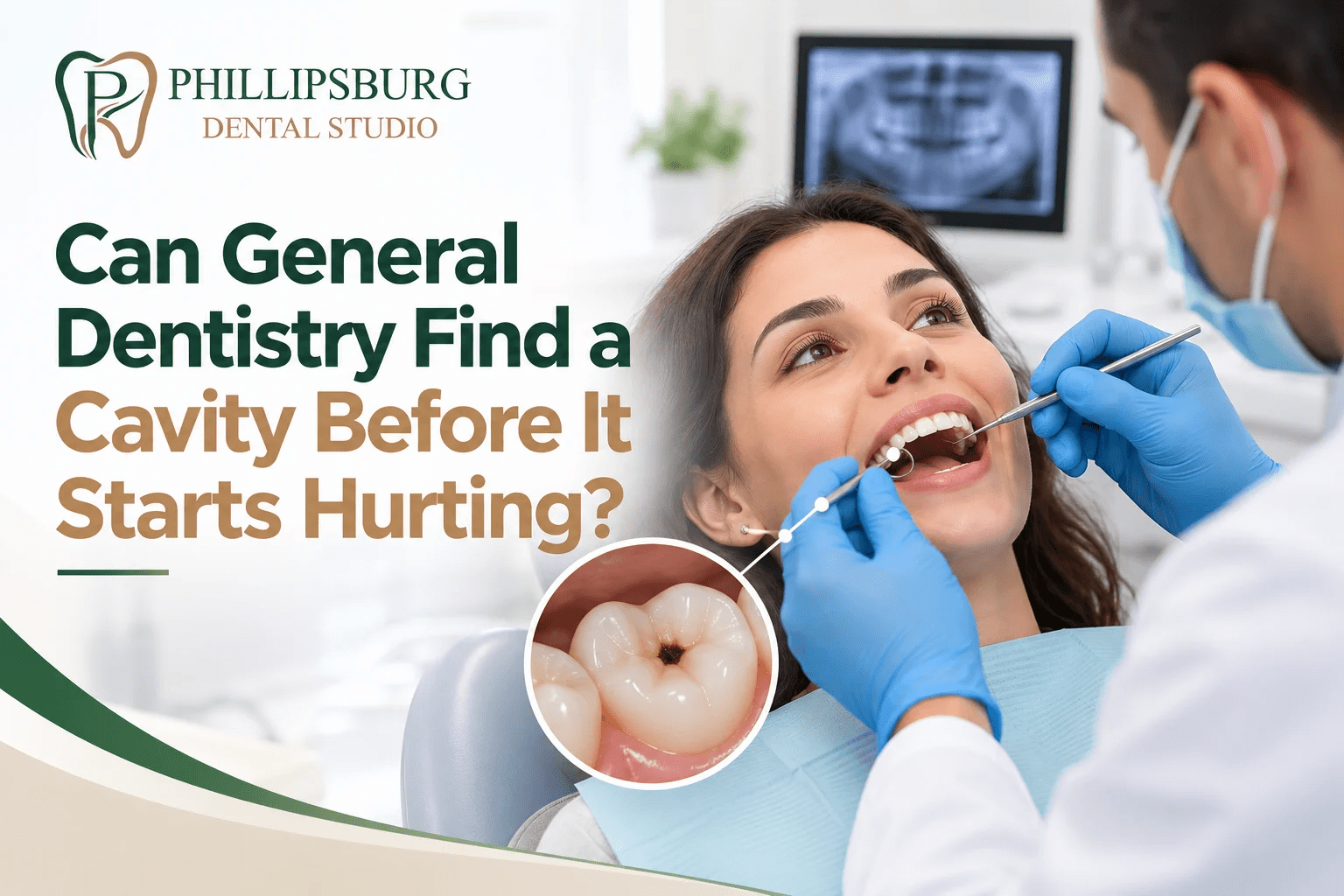
A cavity does not always cause pain in its early stages. Tooth decay can develop gradually without noticeable symptoms, making it difficult to recognize a problem before it becomes more serious. By the time you experience a toothache or sensitivity, the decay may have already progressed beyond the tooth’s outer enamel.
This is why regular dental visits are an important part of maintaining good oral health. Through professional examinations and dental X-rays when needed, a dentist can identify signs of tooth decay before discomfort begins. At Phillipsburg Dental Studio, general dental care in Phillipsburg and preventive strategies can help patients identify potential problems early and understand their treatment options.
Understanding how cavity detection works can help you take proactive steps to protect your teeth, avoid more extensive treatment, and maintain a healthy smile.
How Does a Dentist Detect a Cavity Before It Hurts?
Dentists use several methods to identify tooth decay, even when a patient has no pain or visible symptoms. A professional dental examination helps evaluate the condition of your teeth and identify areas that may require closer attention.
Here are some common methods used during a dental cavity diagnosis.
1. Visual Examination of the Teeth
During an examination, a dentist checks the surfaces of your teeth for changes that may indicate decay. These can include white or chalky spots, discoloration, pits, and visible holes in the enamel.
Early decay may appear as a subtle change in the tooth’s surface rather than an obvious cavity. Identifying these changes can help the dentist determine whether preventive measures, further evaluation, or restorative treatment may be appropriate.
2. Dental X-Rays
Some cavities develop between teeth or in areas that are difficult to examine visually. Dental X-rays can help identify decay in these locations and reveal problems that might otherwise go unnoticed.
Your dentist may recommend X-rays based on your dental history, symptoms, age, and risk of developing cavities. They are not necessarily required at every appointment, but they can provide valuable information when clinically appropriate.
3. Evaluating Tooth Sensitivity and Dental History
Your dentist may also ask about sensitivity, previous cavities, dietary habits, oral hygiene practices, and other factors that affect your risk of tooth decay.
Although sensitivity can have several causes, discussing any changes in your teeth helps your dentist determine whether additional examination is necessary.
Combining these methods allows general dentistry services to identify potential dental problems and recommend appropriate next steps before symptoms become more noticeable.
What Are the Early Signs of a Cavity?
Cavities can develop without causing pain, particularly when decay is limited to the outer enamel. However, some changes may indicate that a tooth needs professional attention.
Common signs include:
- White or chalky spots: These may indicate mineral loss from the enamel, an early stage of tooth decay.
- Brown or dark discoloration: Certain stains may be harmless, but some areas of discoloration can indicate decay.
- Sensitivity to hot, cold, or sweet foods: This can occur with tooth decay, although other dental conditions can cause similar symptoms.
- Small pits or holes: Visible damage to the tooth may suggest that decay has progressed.
- Food frequently getting trapped: Repeatedly catching food between particular teeth may indicate an area that needs examination.
It is important to remember that these signs do not always confirm a cavity. Only a dental professional can evaluate the tooth and determine the likely cause.
Early cavity detection is especially valuable because it allows your dentist to identify changes before they develop into more significant dental problems. Even if your teeth feel completely normal, routine examinations can help uncover decay that is not visible to you.
Why is Early Cavity Detection Important?
Finding tooth decay early can make a meaningful difference in how the condition is managed. When a dentist identifies a problem before it becomes extensive, there may be more opportunities to preserve healthy tooth structure and prevent further damage.
1. It May Help Prevent Further Tooth Damage
Tooth decay does not usually reverse once a hole has formed in the tooth. However, early enamel changes that have not yet developed into a cavity may sometimes be remineralized with appropriate preventive care.
Identifying these changes gives your dentist an opportunity to recommend measures that may help strengthen the enamel and reduce the risk of progression.
2. It May Reduce the Need for Extensive Treatment
When decay is identified early, treatment may be less complex than it would be if the problem progressed into deeper layers of the tooth.
Depending on the extent of the damage, treatment may involve preventive measures or a filling. More advanced decay can require additional procedures to restore the tooth’s function and structure.
3. It Helps Preserve Natural Teeth
Your natural teeth play an important role in chewing, speaking, and maintaining your bite. Timely treatment helps protect the remaining healthy tooth structure and reduces the risk of complications associated with untreated decay.
4. It Supports Long-Term Oral Health
Regular dental visits help your dentist monitor changes over time, assess your risk of developing new cavities, and recommend appropriate preventive measures.
For patients seeking general dentistry in Phillipsburg, NJ, consistent dental care can be an important part of maintaining oral health and addressing concerns before they become more difficult to manage.
What Happens During a Routine Dental Checkup?
A routine dental checkup involves more than checking whether your teeth hurt. It gives your dentist an opportunity to assess your overall oral health and identify potential concerns.
Depending on your needs, an appointment may include the following steps.
1. Examination of Your Teeth and Gums
Your dentist examines your teeth for signs of decay, cracks, worn enamel, and problems with existing fillings or other restorations. Your gums may also be evaluated for signs of inflammation or gum disease.
2. Assessment of Cavity Risk
Your dental history, oral hygiene habits, diet, dry mouth, and previous cavities can influence your risk of developing tooth decay. Your dentist may consider these factors when deciding how frequently you should return for examinations.
3. Dental X-Rays When Necessary
If your dentist suspects decay between teeth or needs to evaluate an area that cannot be assessed adequately during a visual examination, dental X-rays may be recommended.
The decision depends on your individual circumstances rather than a fixed schedule for every patient.
3. Professional Cleaning and Whitening
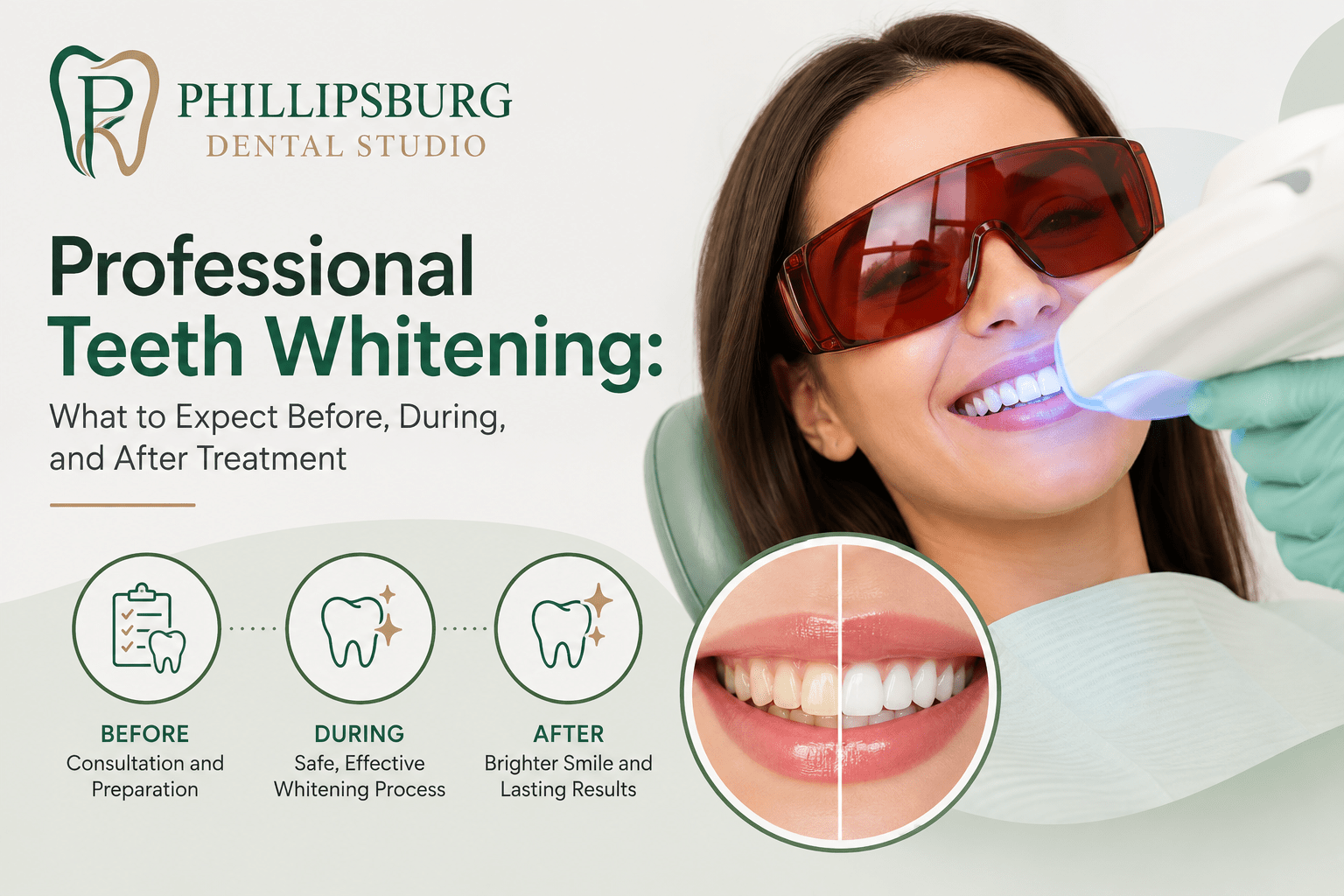
A professional dental cleaning removes plaque and tartar that accumulate in areas that are difficult to clean thoroughly at home. This supports gum health and helps maintain a cleaner oral environment. For patients looking to improve the appearance of their smile, a professional whitening treatment can also help reduce tooth discoloration and brighten their teeth.
4. Personalized Preventive Recommendations
Your dentist may suggest changes to your brushing and flossing routine, fluoride use, dietary habits, or other preventive measures based on your needs.
A routine dental checkup helps you understand your oral health and provides an opportunity to address developing concerns before they cause significant discomfort.
Interesting Read: Professional Teeth Whitening: What to Expect Before, During, and After Treatment
Can Early Cavities Be Treated Without a Filling?
In some cases, yes. The appropriate treatment depends on whether the tooth has experienced early mineral loss or whether decay has already created a physical hole in the enamel.
Early Tooth Decay Without a Cavity
When decay is limited to the early stages and the tooth surface remains intact, remineralization may help strengthen the enamel. Your dentist may recommend fluoride treatments, improved oral hygiene, and changes to habits that contribute to decay.
These measures can sometimes stop or reverse early enamel mineral loss, but they cannot reliably repair a cavity once a hole has formed.
Cavities That Require a Filling
When decay has damaged the tooth structure and created a cavity, a filling is often needed to remove the decayed portion and restore the affected area.
The specific approach depends on the cavity’s size, location, and depth. Your dentist will explain the available options and recommend treatment based on the condition of your tooth.
More Advanced Tooth Decay
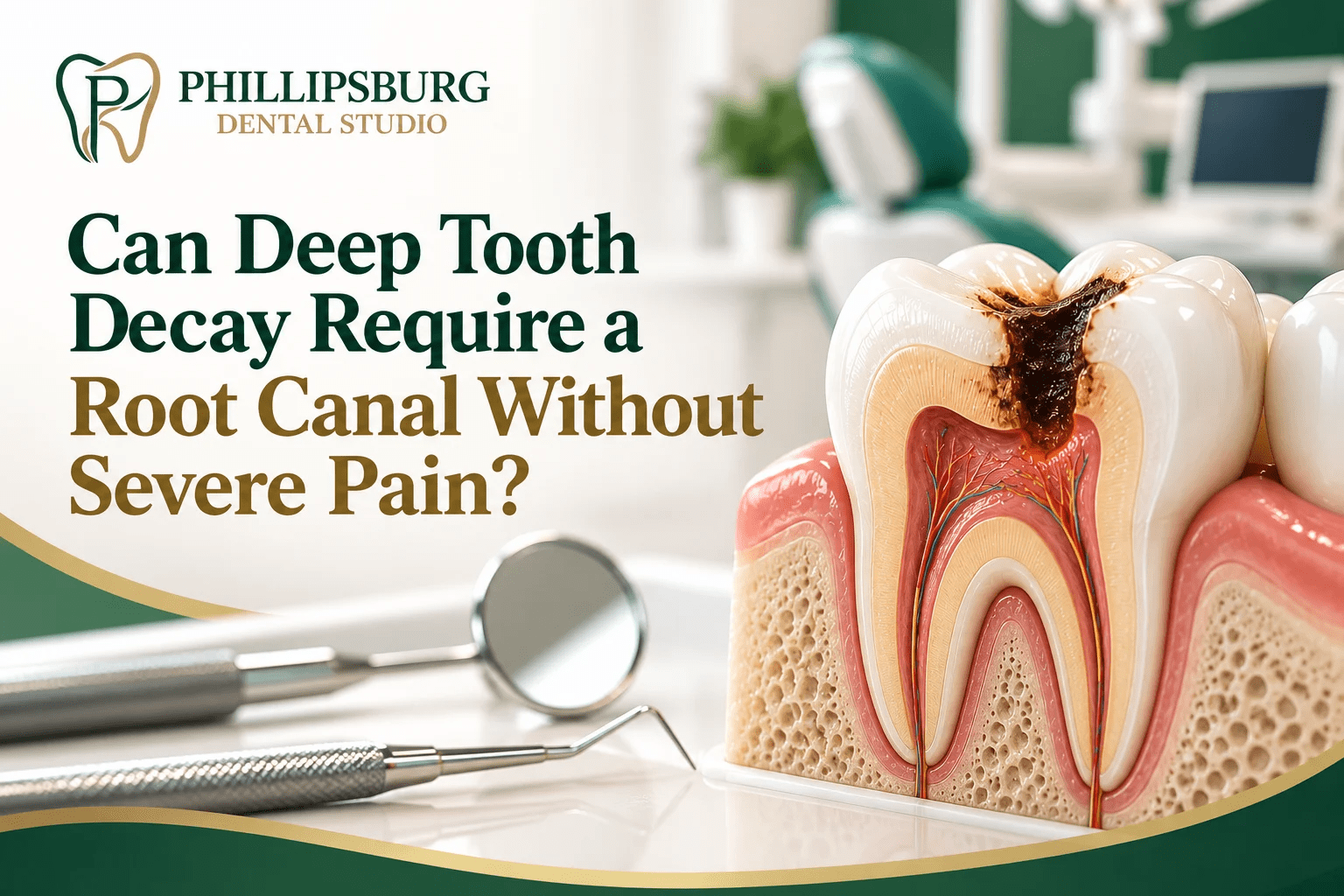
If decay progresses into the inner portion of the tooth, it may affect the dental pulp, which contains nerves and blood vessels. More extensive treatment, such as root canal therapy followed by a suitable restoration, may be necessary in some cases.
This is one reason early cavity detection matters. Identifying tooth decay before it advances may help reduce the complexity of treatment and preserve more of the natural tooth.
How Often Should You Visit a General Dentist for Cavity Detection?
The recommended frequency of dental visits varies from person to person. Some patients benefit from examinations every six months, while others may need more frequent appointments because of their oral health history or increased risk of tooth decay.
Your dentist may recommend a personalized schedule based on factors such as:
- A history of frequent cavities.
- Existing fillings, crowns, or other dental restorations.
- Difficulty maintaining effective brushing and flossing habits.
- Frequent consumption of sugary foods and drinks.
- Dry mouth or other factors that increase cavity risk.
- Changes in your teeth, gums, or overall oral health.
If you are looking for a general dentist in Phillipsburg, regular visits can help you monitor your dental health even when you are not experiencing pain.
Do not wait until a toothache develops to schedule an examination. Cavities can progress without obvious symptoms, and a professional assessment can help identify concerns that may not be apparent at home.
What Happens If a Cavity Is Left Untreated?
A cavity may begin as a small area of mineral loss, but untreated decay can gradually damage more of the tooth.
As the decay progresses, several problems may develop.
1. Increasing Tooth Sensitivity
When decay moves beyond the outer enamel, the affected tooth may become more sensitive to cold drinks, hot foods, or sweet substances. Sensitivity can also result from other dental conditions, so it should be evaluated professionally.
2. Persistent Toothache
As decay reaches deeper parts of the tooth, discomfort may become more frequent or intense. Pain while chewing or spontaneous toothache can indicate a problem that needs prompt attention.
3. Damage to the Inner Tooth
If decay reaches the pulp, infection and inflammation may occur. Treatment may become more extensive, depending on the damage and whether the tooth can be restored.
4. Possible Infection or Tooth Loss
Severe, untreated decay can lead to a dental abscess or damage that makes saving the tooth difficult. Prompt treatment can help reduce the risk of these complications.
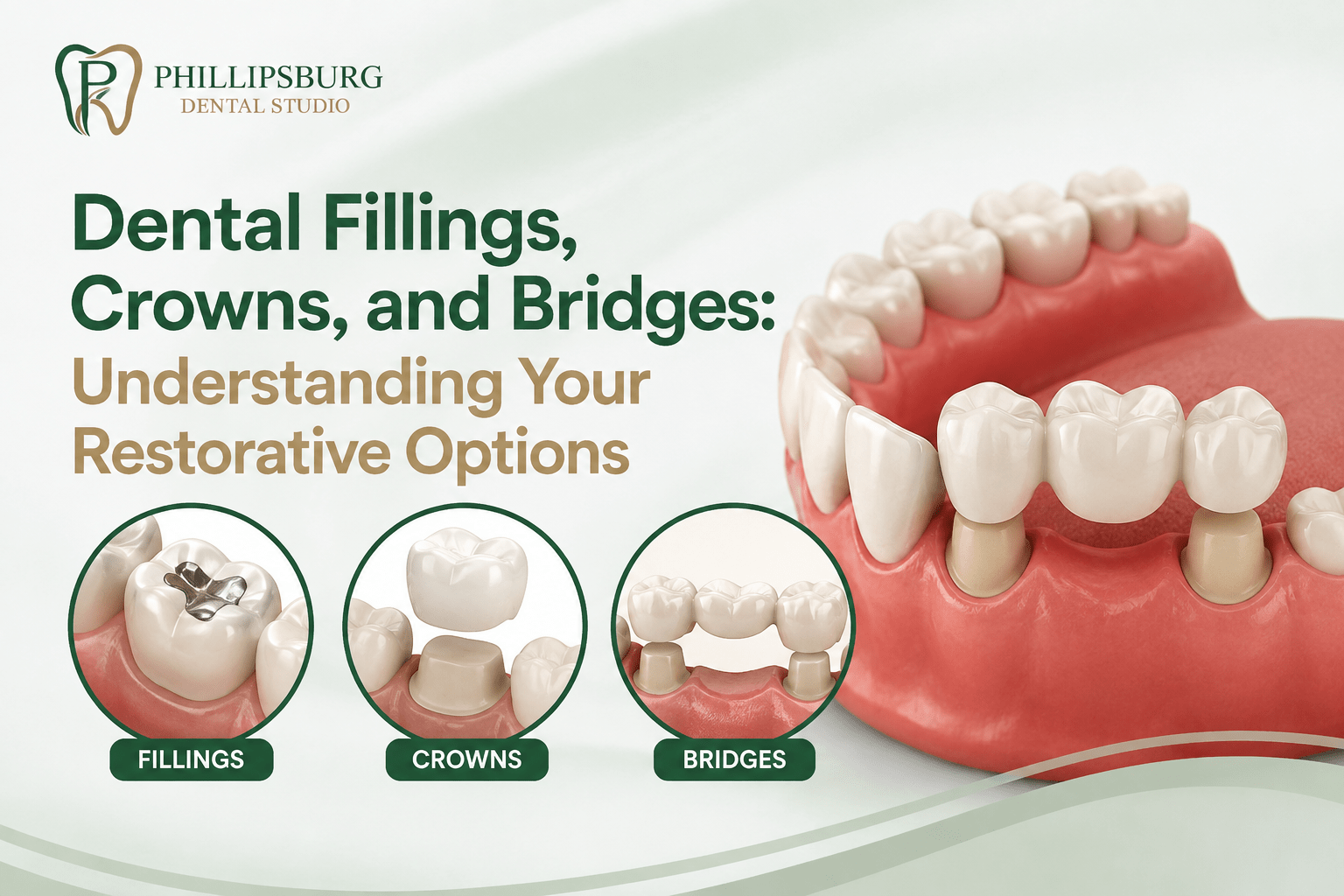
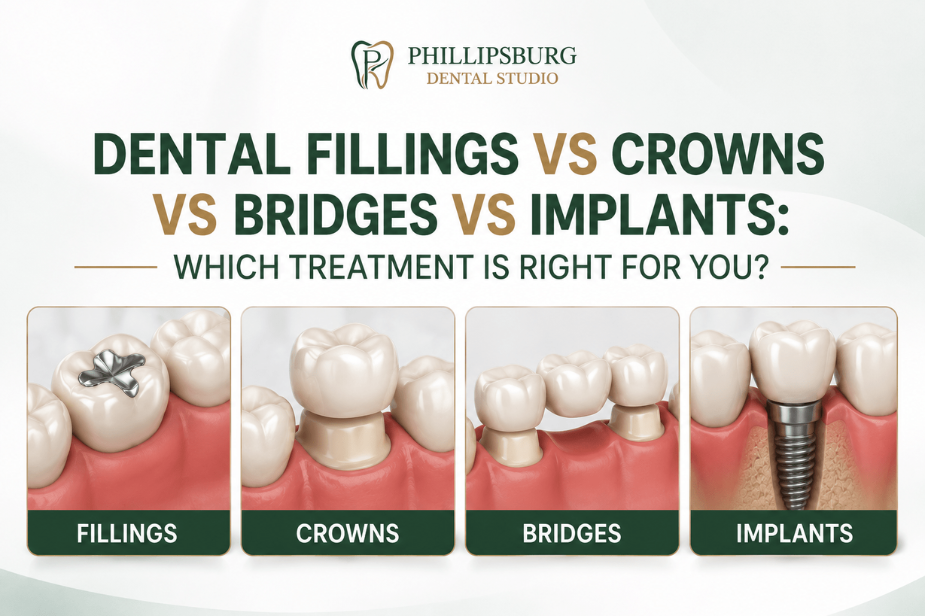
Restorative dentistry focuses on repairing damaged teeth and helping restore their function. Depending on the severity of decay, treatment may involve fillings, crowns, or other procedures.
If you notice a new cavity, discoloration, or sensitivity, arranging a dental examination early is generally preferable to waiting for the problem to worsen.
How Does Phillipsburg Dental Studio Help Prevent Cavities?
Preventive dental care focuses on identifying potential problems, reducing the risk of oral disease, and helping patients maintain healthy teeth and gums.
At Phillipsburg Dental Studio, patients can discuss their dental concerns and learn about appropriate general and preventive dental care options.
A preventive approach may involve several important steps.
Regular Dental Examinations
Professional examinations help identify signs of decay, evaluate existing restorations, and assess changes in your oral health. Your dentist can also explain whether additional testing or treatment is recommended.
Guidance on Daily Oral Hygiene
Brushing twice daily with fluoride toothpaste and cleaning between your teeth every day can help remove plaque and reduce the risk of cavities.
Your dentist can offer practical advice on brushing technique, flossing, and other oral hygiene practices that suit your needs.
Fluoride and Other Preventive Measures
Fluoride helps strengthen tooth enamel and can support the remineralization of early areas of mineral loss. Depending on your cavity risk, your dentist may recommend additional fluoride products or other preventive treatments.
Personalized Dental Care
Every patient has different dental needs. Your dentist can consider your history of tooth decay, oral hygiene routine, and other risk factors when recommending an appropriate care plan.
If you are searching for a dentist in Phillipsburg, NJ, consider choosing a practice that emphasizes regular dental examinations, patient education, and preventive care.
The goal is to identify potential problems as early as possible and help you make informed decisions about maintaining your oral health.
When Should You Seek Emergency Dental Care for a Cavity?
A cavity that does not hurt may be suitable for evaluation during a routine dental appointment. However, certain symptoms can indicate a more urgent problem.
Contact a dental professional promptly if you experience:
- Severe or persistent tooth pain.
- Increasing pain when biting or chewing.
- Swelling around the gums, jaw, or face.
- A bad taste or drainage that may indicate an infection.
- Fever accompanied by dental pain or swelling.
Facial or neck swelling that affects breathing or swallowing requires emergency medical attention.
If you are experiencing significant tooth pain and searching for emergency dentistry seek an appropriate local dental evaluation as soon as possible. Do not delay care simply because you suspect the problem began as a small cavity.
Early assessment can help determine the cause of your symptoms and identify the treatment needed to address the problem.
Conclusion: Detect Cavities Early With Regular Dental Visits
Yes, general dentistry can often identify cavities before they start hurting. Visual examinations, dental X-rays when appropriate, and an assessment of your oral health history can help dentists recognize tooth decay before noticeable symptoms develop.
Early identification is important because initial enamel changes may respond to preventive care, while established cavities often require restorative treatment. Regular checkups, good oral hygiene, and personalized preventive recommendations can help reduce your risk of more extensive dental problems.
At Phillipsburg Dental Studio, patients can discuss their oral health concerns and learn about suitable preventive and general dental care options. If it has been a while since your last dental examination, consider scheduling a visit rather than waiting for a toothache to appear.
Protecting your smile starts with taking action before a small dental concern becomes a bigger problem.
Frequently Asked Questions
1. Can a dentist find a cavity before it starts hurting?
Yes. Dentists can often identify early tooth decay during a visual examination or with dental X-rays when appropriate. Because cavities may develop without noticeable symptoms, regular dental visits are important even when your teeth feel normal.
2. Can dental X-rays detect cavities that are not visible?
Yes. Dental X-rays can help reveal decay between teeth or beneath surfaces that are difficult to examine visually. Your dentist will determine whether X-rays are necessary based on your dental history, symptoms, and individual risk factors.
3. How quickly can a small cavity get worse?
The progression of a cavity varies depending on factors such as oral hygiene, diet, fluoride exposure, saliva, and the location of the decay. Some areas progress slowly, while others worsen more quickly. A dentist can evaluate the affected tooth and recommend an appropriate monitoring or treatment plan.
4. Can an early cavity heal without a filling?
Early tooth decay that has not yet formed a hole in the enamel may sometimes be reversed through remineralization. Fluoride, good oral hygiene, and dietary changes can help. However, a cavity that has already caused a physical hole in the tooth generally requires restorative treatment.
5. How often should I get my teeth checked for cavities?
Many people benefit from dental checkups every six months, but the ideal interval depends on individual oral health needs and cavity risk. Your dentist can recommend a schedule based on your dental history and current condition.
6. What happens if a cavity is left untreated?
Untreated decay can spread deeper into the tooth, leading to sensitivity, pain, infection, and potentially tooth loss. Depending on the severity, treatment may require a filling, crown, root canal therapy, or another restorative procedure.
7. Should I visit a dentist if I have a cavity but no pain?
Yes. A cavity can progress even when it does not cause discomfort. Scheduling an examination allows your dentist to assess the extent of the decay and determine whether preventive measures or restorative treatment are needed.
8. What is the difference between preventive dentistry and restorative dentistry?
Preventive dentistry focuses on reducing the risk of dental problems through examinations, cleanings, fluoride, and oral hygiene guidance. Restorative dentistry focuses on repairing teeth that have been damaged by decay, fractures, or other conditions. Both approaches help support long-term oral health.